UK Buyer's Guide · Updated May 2026
Cordless lawn mowers UK: how to choose
Five years ago, telling someone to buy a cordless mower for anything bigger than a courtyard would've earned you a funny look. Today a £300 battery mower will out-cut a £200 petrol all day long. Quieter, lighter, no fiddling with choke and primer, and on a typical 500 m² lawn it finishes on one charge. This guide explains how to pick the right one: voltage, deck size, battery and runtime, brands and where to buy.
Independent · No manufacturer paid for placement · We may earn a commission on qualifying purchases.
So what actually is a cordless lawn mower?
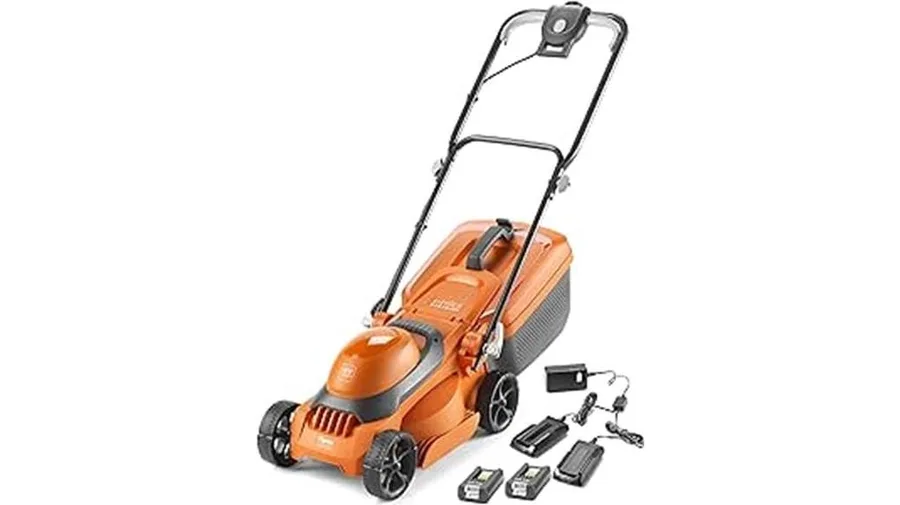
Same machine you've always known - rotary deck, blade underneath, grass box at the back - except the petrol engine and the mains cable have been swapped out for a lithium-ion battery that clicks into the deck. That's it. Most mowers above £200 use a brushless motor (better, quieter, lasts longer), the battery slots in like a power tool, and you press a button instead of yanking a starter cord.
Why did the category explode between 2018 and 2024? Three things lined up at once. Battery cells got 80% cheaper. Brushless motors got cheap. And the big brands - Bosch, Ryobi, DeWalt, Makita - started sharing one battery across an entire range of tools. So that £150 battery you bought for the mower? It also runs your hedge trimmer, your strimmer, your blower and the drill in the shed. That's why cordless is now the default first mower for most UK households. It just makes sense.
Cordless vs petrol vs corded electric - which to buy
Three power types, three different jobs. Get this decision right and the rest of the buying process is easy.
| Factor | Cordless | Petrol | Corded electric |
|---|---|---|---|
| Best lawn size | Up to 800 m² | 500 m² and up | Up to 200 m² |
| Upfront cost | £200-£700 | £250-£900 | £90-£200 |
| Running cost (per mow) | 1-3p electricity | 30-80p petrol | 1-2p electricity |
| Noise | 78-84 dB | 92-100 dB | 78-82 dB |
| Maintenance | Sharpen blade, clean deck | Oil, spark plug, fuel, blade | Sharpen blade, replace cable |
| Cold-start hassle | Press button | Pull cord, prime, choke | Press button |
| Range limit | Battery runtime | Tank size | Cable length (usually 25 m) |
| Weight | 9-22 kg | 22-35 kg | 10-14 kg |
| Long-term cost | Battery replacement at 5-8 years | Annual service plus fuel | Cable replacement |
Honest answer for most UK gardens under 600 m²? Cordless. Bigger lawn, country pile, mowing every other day all summer? Petrol. Tiny garden right next to a power socket and you're tight on budget? Corded electric still works perfectly fine and saves you £150. No shame in that.
How we choose these mowers
We don't run a test lab and we don't pretend to. Our recommendations are built from published manufacturer specifications, verified owner reviews on Amazon UK and retailer sites, and UK pricing data, cross-checked so the numbers on this page match the numbers you'll find on the box. Where a figure is the maker's claim rather than an independent measurement, we say so.
Rankings are based on cut quality, battery and runtime for the garden size in question, weight, build, and value at UK prices. We update picks when models are discontinued or superseded. We earn affiliate commission on some links, but it never decides the order of a list. More on our method.
Popular cordless models we rate
A representative shortlist of popular cordless mowers, grouped by who each one suits. For the full head-to-head ranking with scores, see our best battery mower rankings. Click any model to read the full review, with the specs, runtime claims and the alternatives we weighed each one against.
Gtech CLM 2.0
Gtech
The CLM is the cordless mower we recommend most often to first-time buyers. It cuts cleanly, the rear roller leaves visible stripes on a typical British lawn, and the 36-minute runtime covers a 200 m² garden with a full battery to spare. Two niggles: no mulching plug as standard, and the 33 cm deck means a long mow on anything over 350 m².
Pros
- + Light enough to carry one-handed
- + Stripes that genuinely look the part
- + Click-out battery lasts a 200 m² lawn easily
Cons
- − No mulching plug in the box
- − Pricey vs supermarket brands

Bosch UniversalRotak 36-550
Bosch
If you already own Bosch garden tools, the 36 V Power for All battery shared across hedge trimmers, blowers and strimmers makes the UniversalRotak the obvious pick. The 50 L box and 40 cm deck are class-leading for a sub-£350 cordless.
Pros
- + ProSilence motor - genuinely quiet
- + Works on the 36 V Power for All platform
- + 50 L grass box is enormous for the class
Cons
- − Heavier than the Gtech at 14 kg
- − Plastic deck flexes on uneven ground
Ryobi RY18LMX40A-150
Ryobi
For the half a million UK households that already own a Ryobi drill or strimmer, the RY18LMX40A is the cheapest sensible cordless mower on the market - buy bare-tool and you are spending under £160 for a real 40 cm deck. It is not the most powerful mower here, but on a dry, regularly mown lawn it is more than enough.
Pros
- + Slots into the 18 V ONE+ ecosystem (200+ tools)
- + Self-propelled drive on the 40 cm model
- + Brushless motor - long lifespan
Cons
- − Single 18 V battery struggles on damp grass
- − Cut height adjustment is fiddly
EGO LM2122E-SP
EGO
The closest a cordless gets to the feel of a petrol self-propelled mower. The 56 V motor cuts long, wet grass that smaller cordless mowers stall on, and the variable-speed drive makes a 600 m² lawn an actual pleasure. If your garden is bigger than 400 m² and you want to ditch petrol, this is the one.
Pros
- + 56 V - petrol-equivalent power
- + Self-propelled at variable speed
- + IPX4-rated against rain
Cons
- − Expensive
- − Stripes are softer than rear-roller mowers
Mountfield Princess 34 Li-48
Mountfield
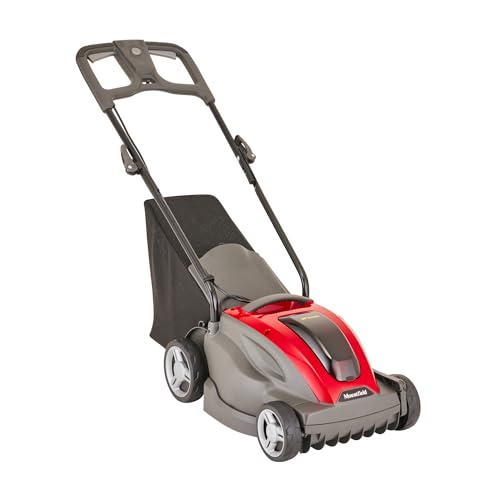
A proper Italian-built mower for a fraction of the cost of a petrol Princess. If you care about stripes more than acreage, this is the cheapest way to get them from a battery mower with a metal deck.
Pros
- + Steel deck - feels solid
- + True rear roller for sharp stripes
- + 48 V system
Cons
- − Only 34 cm cut
- − Battery sold separately on some retailers
What to actually look for when buying a cordless lawn mower
Match the deck width to your lawn
Deck width is how wide a strip the blade cuts in one pass. A wider deck finishes the lawn faster but is heavier and harder to steer in tight spots. As a rough guide:
- 30-34 cm - courtyards, front lawns, gardens under 150 m²
- 36-40 cm - typical UK semi-detached lawn, 150-400 m²
- 41-46 cm - large garden, 400-800 m², expect a heavier mower
- 48 cm+ - corner of the cordless market - usually self-propelled twin-battery
Voltage drives torque
The bigger the number on the battery (18 V, 36 V, 40 V, 56 V, 80 V), the more torque the motor can deliver. Torque is what stops a mower stalling when you push it through a clump of long, damp grass. For a manicured front lawn that is mown every week, 18 V is plenty. For a tussocky back lawn that goes feral on holiday, you want 36 V or more. Anything advertised as "petrol-equivalent" is normally 56 V or higher.
Single battery or twin?
Twin-battery mowers run two packs in series (or one as a backup). The benefit is range - twice the runtime, no swap. The cost is roughly £100 extra and the bay is heavier. For lawns over 500 m², twin is worth it. For lawns under 300 m², single is fine and cheaper.
Self-propelled or push?
Self-propelled mowers drive themselves forward via the front or rear wheels - you steer rather than push. Worth the £80-£150 premium if your lawn slopes, if you mow more than 400 m², or if pushing a 20 kg mower is genuinely uncomfortable. Push mowers are simpler, cheaper, lighter and better for tight, flat lawns under 200 m².
Mulching, grass box, side discharge
Three ways to deal with the cuttings. Grass box collects them - best for tidy lawns and the most common option. Mulching chops the cuttings repeatedly inside the deck and drops them back onto the lawn as fertiliser - best for keen lawn-care, requires a mulching plug. Side discharge spits the cuttings sideways onto the lawn - best for very long grass and rougher gardens. The good news: most decent cordless mowers under £400 do all three.
Weight matters more than the spec sheet suggests
A 22 kg mower lifted over a 20 cm garden step every Sunday gets old fast. If the user is older, smaller or has back trouble, knock 5 kg off your maximum. A 12 kg mower is genuinely carryable; a 22 kg mower is a kerb-bumper. Always check the quoted weight includes the battery, as manufacturer figures sometimes leave it out.
The cordless brands worth shortlisting
Cordless is a battery platform decision as much as a mower decision. If you already own one of these systems, your shortlist gets short fast.
- Bosch - 18 V and 36 V Power for All. The most cross-compatible mainstream UK platform.
- Ryobi - 18 V ONE+ and 36 V MAX. Over 200 compatible tools.
- Makita - LXT 18 V and XGT 40 V. Pricier but built like trade tools.
- DeWalt - XR 18 V and FlexVolt 18/54 V. Strong on power, light on garden range.
- Gtech - single platform across mower, hedge trimmer, blower. Light, easy, expensive batteries.
- EGO - 56 V Arc Lithium, the closest cordless gets to a petrol feel.
- Stihl - AK and AP systems. Built for trade-grade longevity.
- Husqvarna - strong on robot mowers, decent on cordless rotaries.
Where to buy a cordless lawn mower in the UK
Five retailers cover the vast majority of cordless mower sales:
- B&Q - best for Bosch, Mac Allister and Erbauer. Often the cheapest in spring.
- Argos - best for Flymo, Bosch and budget. Click-and-collect to over a thousand stores.
- Screwfix - best for trade brands like DeWalt, Makita, Milwaukee and Ryobi. Often has bare-tool deals.
- Amazon UK - widest range, best price tracking, trickier returns on heavy items.
- Mowers Online / Mowdirect - specialists worth a look for Mountfield, Stihl, Cobra, Hayter and the more serious end of the market.
We monitor pricing across all five and link to whichever is cheapest at the time on the individual review pages. If you spot a price difference, it is almost always because Amazon or B&Q is running a flash deal.
Related guides on this site
- Best cordless lawn mowers ranked
- Best cordless lawn mowers under £200
- Best cordless mowers for large gardens
- Cordless lawn mowers with a rear roller (for stripes)
- Best lightweight lawn mowers (easy to push, lift and store)
- Cordless vs petrol - which is right for your garden?
- How to sharpen a lawn mower blade
What owners say about top cordless picks
Recurring feedback drawn from real owner reviews and forums. Attributed to source, not our own testing.
EGO Power+ LM2122E-SP
Owners rate it the closest cordless to petrol: the wide 52 cm deck and 56 V motor power through long grass, with a charge lasting close to the claimed runtime. The recurring gripe is ergonomics, not cutting.
- LIKED
"Ploughs into overgrown grass without slowing; the motor ramps up power to cope rather than stalling." Trusted Reviews
- LIKED
"Big wheels make straight lines and stripes easy, and one charge gives close to 50 minutes of real mowing." Trusted Reviews
- GRIPE
"The grass bag sticks out so you can kick it on every step at higher drive speeds, and there is no bag-full indicator." Trusted Reviews
- GRIPE
"The variable drive-speed controller is finicky to set to a comfortable pace." Lawn Care Forum
Bosch UniversalRotak 36-550
Owners rate it well overall (around 3.9 / 5 across UK reviews) for its genuinely quiet ProSilence motor and ~50 minute runtime. The common niggles are a fiddly grass box and casing, not the cut.
- LIKED
"The ProSilence motor is noticeably quieter than rivals, and one charge covers a lawn up to about 550 m²." Which?
- LIKED
"One-touch height adjustment and the LeafCollect blade make it easy to live with day to day." EasyLawnMowing
- GRIPE
"The grass box can be tricky to empty and the plastic casing is stiff to open." Which? owner reviews
- GRIPE
"A single 4.0 Ah battery is more than a small garden needs; it suits medium lawns better." Owner reviews
Gtech CLM 2.0
Owners love the 50 L box and how simple it is to live with, but two complaints recur: it can cut out on the lowest height settings, and real runtime falls well short of the claim on long or damp grass.
- LIKED
"The 50 L grass box is far bigger than most cordless rivals, so far less stopping to empty it." EasyLawnMowing
- LIKED
"Hard to fault for the price; build quality and reliability hold up well." Ideal Home
- GRIPE
"It keeps cutting out on the lowest cutting height when the ground is uneven and the blade catches." Owner reviews, EasyLawnMowing
- GRIPE
"Real runtime is closer to 20 minutes than the headline figure once the grass is long or wet." Owner reviews, EasyLawnMowing
Makita DLM382
Owners rate it highly on Amazon for being quiet, light and sturdily built, with the twin-battery setup giving a long cut. The limits are large or steep lawns and long wet grass.
- LIKED
"Quiet, lightweight and cuts even high grass with ease, then drops low for a clean finish." Amazon UK owner reviews
- LIKED
"Twin 18 V LXT batteries mean it cuts for ages, and the build is sturdy as you expect from Makita." eBay owner reviews
- LIKED
"The 40 L box has a fill-level indicator and pops off easily to empty." Which?
- GRIPE
"It can struggle on long grass, especially when wet, and is not the one for very large or steep lawns." Which? owner reviews
- GRIPE
"No self-propelled option, and buying the kit with batteries rather than body-only pushes the price up." Amazon UK owner reviews
Ryobi 18V ONE+ mower
Owners praise how light it is and the value of the ONE+ ecosystem, but the single complaint dominates every review: battery life. A second pack quickly goes from nice-to-have to essential.
- LIKED
"Ultra-light, easy to store, and the mulching function works well for a small lawn." DIY Garden
- LIKED
"Slots into the 18 V ONE+ system, so the battery runs your other Ryobi tools too." The Review Guy
- GRIPE
"A genuine 5.0 Ah pack gives roughly 15 to 20 minutes, best kept to lawns under about 150 m²." The Gadgeteer
- GRIPE
"A spare battery stops being a luxury and becomes a necessity for anything but a small garden." DIY Garden
Mountfield Princess 34 Li-48
Owners buy it for the rear roller and the classic British stripe, and on that it delivers. The honest caveat from reviewers: being lightweight, the stripes are not as deep or long-lasting as a heavy petrol mower.
- LIKED
"The integrated rear roller leaves neat classic stripes with no extra effort." Mountfield owner reviews
- LIKED
"A solid steel deck and proper roller at a fraction of a petrol Princess." EasyLawnMowing
- GRIPE
"Being lightweight, the stripes it presses in do not last as long as a heavier mower would manage." Paul's Mower Reviews
- GRIPE
"The 34 cm model ships with a single 2 Ah battery; the 38 cm version adds a second for bigger lawns." Owner reviews
Sources: Trusted Reviews, Lawn Care Forum, Amazon UK owner reviews, Which?, EasyLawnMowing, Ideal Home, Trustpilot, DIY Garden, The Gadgeteer, The Review Guy, Paul's Mower Reviews, Mountfield owner reviews. Owner opinions are summarised and attributed; they reflect their authors, not The Best Mowers.